
Hướng dẫn
How to Verify a Thai Factory Before Ordering: A Practical Buyer's Checklist
Sourcing from Thailand usually starts well: a promising catalogue, a friendly sales contact, a price that fits your margin. The harder part comes next — confirming that the company
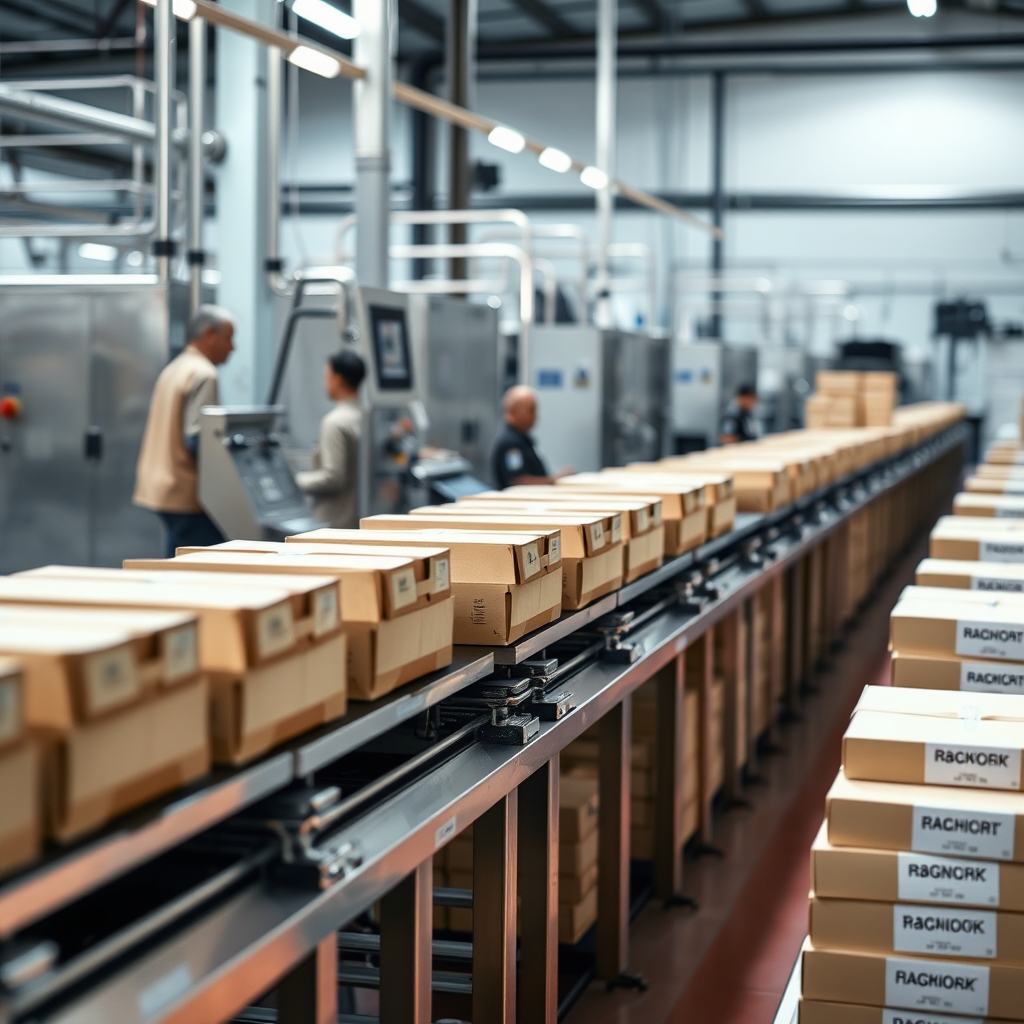
Sourcing from Thailand usually starts well: a promising catalogue, a friendly sales contact, a price that fits your margin. The harder part comes next — confirming that the company you are talking to actually makes what it sells, can export to your market, and can repeat the quality you saw in the sample. Knowing how to verify a Thai factory before ordering is less about suspicion and more about process: a repeatable set of checks you run on every new counterpart, the same way you would in any other sourcing market. This guide walks through what to ask, what documents to look at, how to read a factory visit or video call, and how to structure your first order so that verification continues after the contract is signed. Verification reduces risk — it is not a guarantee, and your own due diligence always stays part of the job.
Step 1: Confirm who you are actually dealing with — manufacturer, trader, or brand owner
The single most common misunderstanding in cross-border sourcing is the supplier type. In Thailand, as elsewhere, a company may be a Manufacturer, an OEM/ODM Factory, a Brand Owner, a Distributor, a Trading Company, or an Export Company — and each one changes your pricing, your lead time, and your control over specifications.
None of these roles is 'bad'. A trading company can be genuinely useful if you buy mixed categories in smaller volumes, and a brand owner is the right counterpart if you want an established Thai label rather than a private label. The problem only appears when a trader is presented as a factory, because you then negotiate production terms with a party that does not control production.
How to tell the difference in practice:
- Ask directly: 'Do you own the production line for this SKU, or do you work with a partner factory?' A professional supplier answers this without hesitation.
- Compare the company name on the quotation with the name on the product label, the certification documents and the shipping documents. Mismatches are not automatically a red flag, but they always deserve an explanation.
- Ask for the factory address separately from the office address, and check whether the company can describe its own production capacity, shifts, and line layout in specific terms.
- On a B2B platform, read the supplier-type label. On THAIMOST, for example, supplier categories are kept distinct and a trading company is not listed as a factory — which saves you the first round of questions when you screen several Thai manufacturers at once.
Step 2: Check the company's legal and export identity
Before product details, verify the business entity. A Thai company that exports regularly will be comfortable sharing basic corporate and export documentation with a serious buyer.
What to request and review:
- Company registration details — the registered legal name in Thai and English, registration number, and registered address. Check that the name on the registration matches the name that will appear on the invoice and the sales contract.
- Export capability — evidence that the company has exported before, such as prior export documentation, familiarity with Incoterms, and the ability to discuss HS codes for your product.
- Bank account ownership — the account name should match the registered company name. Payments routed to a personal account or to a third-party company name are a question you should resolve before, not after, you transfer funds.
- Product documentation — for items that carry certifications, ask which documents exist for the specific SKU you are buying, and in whose name they are issued. Documentation is provided per item at the time of ordering, and a certificate held by one factory does not automatically cover a product made elsewhere.
Keep a simple rule: documents are verified by cross-checking, not by collecting. Three documents that all point to the same legal entity tell you far more than ten documents you never compared.
Step 3: Use platform verification as a filter, not as a conclusion
Buyer-side verification is faster when part of the screening has already been done. Marketplaces that run KYC/KYB on their members give you a shortlist of verified suppliers instead of an open directory, which is where most sourcing time disappears.
On THAIMOST, the trust system is built around three layers — Verified, Audited, Certified — expressed through badges such as Verified Supplier (KYC/KYB), Factory Audited, Gold Exporter and Top Response. Reading these badges correctly matters:
- Verified Supplier means the company's identity and business registration have been checked. It tells you the entity is real; it does not tell you the product is right for your market.
- Factory Audited points to production-site verification rather than paperwork alone — useful when you need a manufacturer, not an intermediary.
- Response-related badges tell you something about communication behaviour, which is a genuine commercial signal when you are managing a production schedule across time zones.
The honest framing: verification reduces risk, it does not remove it. Working with verified Thai suppliers shortens your shortlist and removes the most obvious identity questions, but confirming samples, specifications, packaging and commercial terms remains your responsibility as the buyer. Treat platform badges as the start of your diligence, not the end of it.
Step 4: Audit the production reality — remotely or on site
Once a supplier passes the paper checks, move to the production question: can they make your product, at your specification, repeatedly?
If you can travel, a factory visit is still the strongest tool. Look at the production line for your category specifically, not a general tour; check raw-material storage, labelling and batch records; ask to see how a rejected batch is handled. Ask to see a product being made rather than a product already finished.
If you cannot travel, a structured video audit covers much of the same ground:
- Schedule a live walkthrough, not a pre-recorded video. Ask the person on camera to pan to the entrance sign, the production area, and the warehouse in one continuous shot.
- Ask for today's date written on paper in frame — a simple, non-confrontational way to confirm the footage is current.
- Request photos of the specific machinery used for your SKU and ask what its output capacity is per shift.
- For regulated categories such as food, beverages, cosmetics and herbal or wellness products, ask how the facility manages hygiene zoning, batch coding and traceability.
For OEM/ODM factories, extend the audit to development capability: who formulates, who sources packaging, how revisions are handled, and what happens to your formula and artwork if you change partners later. If your project is private-label beauty or wellness development rather than buying an existing product, a dedicated OEM/ODM partner such as 5FINE (5fineglobal.com) is a different model worth comparing.
Step 5: Verify through samples and a structured RFQ
Documents and audits tell you about the company. Samples and quotations tell you about the product and the commercial relationship.
Run the sample stage deliberately:
- Define your specification in writing first — ingredients or materials, dimensions, weight, packaging, labelling language, shelf life where relevant. Approving a sample without a written spec means you have nothing to compare the production run against.
- Ask whether the sample comes from the production line or from a lab/hand-made batch. Both are legitimate at different stages, but they are not the same thing.
- Keep a sealed retained sample on your side, signed and dated by both parties, as the reference for the first shipment.
Then compare suppliers properly. Send the same RFQ to several shortlisted companies with identical specifications, quantities and destination, so the quotes are genuinely comparable. When you request a quote, ask each supplier to state price basis and Incoterm, minimum order quantity, lead time, certifications available for that SKU, packaging details and payment terms — these vary by product and volume, and are confirmed at quotation stage rather than published in advance. On THAIMOST, sending an RFQ to verified suppliers is free for buyers and goes directly to the company, which also lets you observe how each supplier communicates before you commit to anything.
One practical note on payment: on THAIMOST at its current stage, payment is handled directly between buyer and supplier — the platform does not process or hold funds. That makes it all the more important to agree payment terms, bank details and dispute handling in the contract itself.
Step 6: Build verification into the first order and your import compliance
Verification should not stop at the purchase order. Structure the first transaction so that it continues to generate evidence.
- Contract clarity — put specification, packaging, labelling, inspection criteria, Incoterm, delivery schedule and payment milestones in one signed document. Ambiguity in a contract is almost always resolved in favour of whoever is holding the goods.
- Pre-shipment inspection — either your own representative or a third-party inspection service checks quantity, labelling, packing and visual quality before the goods leave. For a first order this is usually the highest-value spend in the whole process.
- Document review before shipment — invoice, packing list, certificate of origin where applicable, and any product certificates should be checked against the contract before the container moves, not after.
- Import compliance — labelling rules, registration requirements and permitted ingredients differ by destination. Treat any guidance from a supplier or platform as general reference only, and confirm the requirements with the relevant authority or your customs broker in your own country before you order.
Finally, keep records per supplier: documents reviewed, audit notes, approved sample, quotation history, inspection reports. Buyers who source Thai products wholesale across several categories find that this file is what makes the second and third orders fast — and what makes switching suppliers, if ever needed, a decision based on evidence rather than impression. If you are buying established Thai brands to resell rather than developing your own, distribution-focused sourcing through ThaiNex (thainex.com) is another route to compare.
Cần hỗ trợ từ chuyên gia?
Để lại thông tin, đội ngũ sẽ liên hệ sớm.
FAQ
Câu hỏi thường gặp
How do I know if a Thai company is a real factory and not a trading company?
Cross-check three things: the registered legal entity name on company documents, the address of the production site as distinct from the office, and the company's ability to describe its own lines, capacity and quality process in specific terms. Ask directly whether they own the production line for your SKU or work with a partner factory. On a B2B platform, supplier type is usually labelled — THAIMOST keeps Manufacturer, OEM/ODM Factory, Brand Owner, Distributor, Trading Company and Export Company as separate categories, so a trading company is not presented as a factory.
Is a 'verified' badge on a marketplace enough to place an order safely?
No, and it should not be treated that way. Verification such as KYC/KYB confirms that the business entity is real and registered, which removes the most basic identity risk and shortens your shortlist. It does not confirm that a specific product suits your market, that the specification is correct, or that the commercial terms are right for you. Sample approval, written specifications, contract terms and — for a first order — pre-shipment inspection remain your own responsibility.
What should I ask for in an RFQ to compare Thai suppliers fairly?
Send the same specification, quantity and destination to every shortlisted supplier, and ask each to state price with the Incoterm basis, minimum order quantity, lead time, certifications available for that exact SKU, packaging details and payment terms. These figures depend on the product, the volume and the destination, so they are confirmed at quotation stage. Comparing quotes built on different assumptions is the most common reason buyers pick the wrong partner.
Can I verify a Thai factory without travelling to Thailand?
Largely, yes. A live video walkthrough — not a pre-recorded file — covering the entrance, the production area for your category and the warehouse gives you most of what a first visit would. Combine it with document cross-checking, a production-line sample against a written specification, and a third-party pre-shipment inspection on the first order. A physical visit is still valuable for long-term or high-volume relationships, particularly with OEM/ODM factories where development work is involved.
Nội dung do đội ngũ Thaimost biên soạn với mục đích tham khảo. Một số liên kết có thể dẫn tới đối tác được giới thiệu.
Bài viết
Bài viết liên quan

Thai Rice Exporters Directory: A Buyer's Guide to Sourcing Rice from Thailand
Thailand has long been one of the world's major rice origins, offering everything from jasmine (hom mali) rice to parboiled and glutinous varieties for export. But for a buyer outs

Thailand B2B Marketplace for International Buyers: A Practical Sourcing Guide
Sourcing from Thailand has long attracted international buyers looking for strong manufacturing capability across food, beverage, cosmetics, wellness, and packaging. But finding th

How to Send an RFQ to a Thai Supplier: A Practical Guide for Global Buyers
If you're looking to source Thai products wholesale, your first real step isn't browsing endless catalogues — it's learning how to send a clear, effective RFQ (request for quote).