
Sản phẩm
Thai Products Wholesale: A Practical Buyer's Guide to Sourcing Direct from Verified Thai Suppliers
Thai products wholesale buying looks simple from the outside — find a factory, ask for a price, place an order. In practice, most international buyers lose time in the middle: uncl
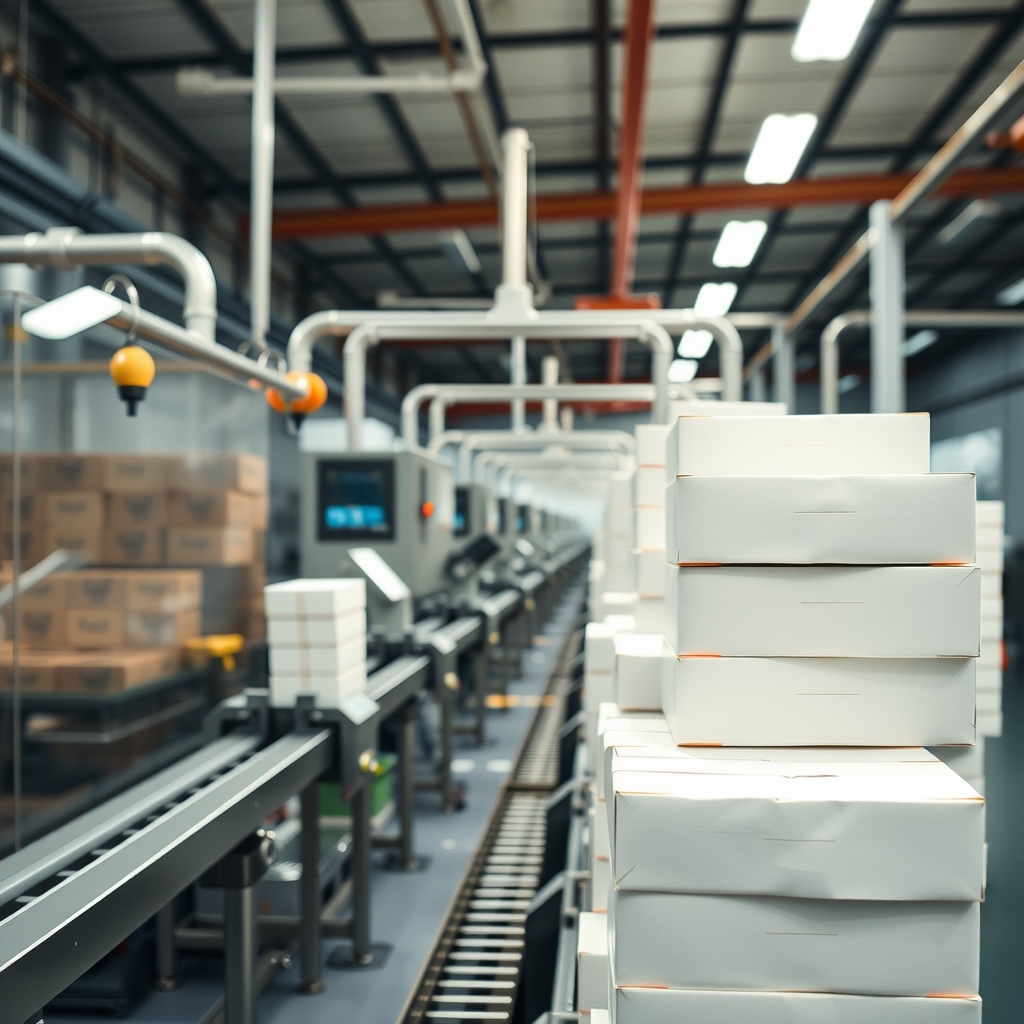
Thai products wholesale buying looks simple from the outside — find a factory, ask for a price, place an order. In practice, most international buyers lose time in the middle: unclear whether the company on the other side is a manufacturer or a trading company, quotes that cannot be compared side by side, and documentation questions that only surface after the deposit is paid. This guide walks through how wholesale sourcing from Thailand actually works — how to shortlist suppliers by category and capability, what to include in an RFQ so the quotes you receive are comparable, how to read supplier types and verification badges, and which commercial details to lock down before you commit. THAIMOST is a B2B marketplace built for exactly this flow: discover verified Thai manufacturers, OEM/ODM factories, brand owners and exporters, then message and quote with them directly. Verification reduces risk, but it is not a guarantee — your own due diligence, sample approval and written terms still do the heavy lifting.
Why buyers source Thai products wholesale — and where the friction usually sits
Thailand is a strong export base across rice, food and beverage, cosmetics, herbal and wellness products, and packaging, with a deep bench of SME manufacturers and OEM/ODM factories. Many of these companies make genuinely good products but have limited reach into international buyer markets, which is why so much Thai wholesale trade historically moved through layered intermediaries.
For a buyer, that layering creates three recurring problems. First, pricing visibility: when a quote passes through several hands, you cannot see what is product cost and what is margin stacking. Second, technical response time: questions about formulation, packaging specification or label artwork get relayed instead of answered by the people who actually run the line. Third, accountability: when something needs adjusting on a repeat order, it is unclear who owns the change.
Buying direct addresses all three — provided you can identify who is really a factory and who is not. That identification step is the core of good wholesale sourcing, and it is where a structured marketplace helps more than an open search. On THAIMOST, suppliers are listed with an explicit business type — Manufacturer, OEM/ODM Factory, Brand Owner, Distributor, Trading Company, Export Company — and a trading company cannot present itself as a factory. That single distinction changes how you read every quote that follows.
Step 1: Define the product brief before you contact anyone
The quality of wholesale quotes you receive is almost entirely determined by the quality of the brief you send. Before opening a supplier list, write down the following in one page:
**Product definition.** Category and sub-category, intended retail or foodservice use, and any reference product you are benchmarking against (your own current SKU is ideal). For food and beverage: flavour profile, shelf-life expectation, pack format. For cosmetics and wellness: format (cream, serum, capsule, sachet), key actives or claims you need to support, and whether you need a stock formulation or a custom one.
**Packaging and labelling.** Primary pack, secondary pack, carton configuration, and whose artwork applies — yours (OEM/private label) or the supplier's existing brand. Say clearly whether you need label text adapted for your destination market.
**Destination and compliance context.** The country you are importing into, and any documentation your customs broker or regulator will expect. Requirements differ by product and by destination, so confirm the specifics with the relevant authority or your clearing agent in your own market rather than assuming a supplier's export file covers it.
**Commercial frame.** Target order volume band, expected ordering frequency, preferred Incoterm, and payment terms you can work with. You do not need final numbers — you need enough for a supplier to judge whether the enquiry fits their line.
A brief like this takes thirty minutes and typically saves several rounds of back-and-forth per supplier.
Step 2: Shortlist suppliers by capability, not just by product photo
Product listings tell you what a supplier sells. Company profiles tell you whether they can serve you. When shortlisting on a B2B marketplace, read both.
Filter first by **industry and product category**, then narrow by **capability signals**: supplier type, certifications held for the products you are interested in, and export experience relevant to your destination region. Where certification matters for your category, treat it as an item to verify per product — documentation is provided per item at the ordering stage, not as a blanket claim across a catalogue.
THAIMOST's trust framework is built on three layers — Verified, Audited, Certified — expressed through badges you will see on supplier profiles:
- **Verified Supplier (KYC/KYB)** — business identity and registration details have been checked.
- **Factory Audited** — the production site has been through an audit process.
- **Gold Exporter** — signals established export activity.
- **Top Response** — indicates the supplier is consistently responsive to buyer enquiries, which matters more than most buyers expect during a first project.
Use these badges to rank your shortlist, not to end your diligence. Verification lowers the probability of a bad match; it does not replace sample approval, reference checks or a clearly written contract. Aim for three to five suppliers per product line — enough to see a real price and capability spread, few enough to manage properly.
Step 3: Write an RFQ that produces comparable quotes
A request for quotation is a comparison instrument. If each supplier answers a different question, you end up comparing nothing.
Send every shortlisted supplier the same structured RFQ and ask for a response in the same structure. Include:
1. **Product specification** — exactly as drafted in your brief, including any tolerance you will accept on formulation or pack size. 2. **Volume scenarios** — quote at two or three volume bands so you can see where the price curve bends. Minimum order quantities vary by product and by supplier, so ask each one to state theirs explicitly rather than guessing from the listing. 3. **Incoterm** — name the one you want quoted (EXW, FOB, CIF and so on) so unit prices are genuinely comparable. If you want a second Incoterm, ask for both. 4. **Lead time** — separate sample lead time, first production lead time and repeat-order lead time. These are confirmed at quotation stage and depend on product, volume and season. 5. **Packaging and artwork** — who supplies the design, who pays for plates or moulds, and whether tooling costs are one-off or amortised. 6. **Documentation** — which export documents accompany the shipment, and which certifications exist for that specific item. 7. **Payment terms** — deposit structure and balance trigger. 8. **Samples** — cost, lead time and whether sample cost is handled separately from the production order.
On THAIMOST, RFQs go directly to verified suppliers at no cost to you, and replies arrive through direct messaging with the supplier. Keep the thread in writing: a documented exchange is the easiest reference point if a specification question arises later.
Step 4: Compare quotes, validate samples, and confirm terms
Build a simple comparison table with one row per supplier and columns for: unit price at each volume band, stated MOQ, Incoterm, lead times, certification status for that item, packaging inclusions, tooling or setup costs, and payment terms. Normalise everything to a single Incoterm and currency before you judge price — a cheaper EXW number can easily land more expensive than a higher FOB number once inland transport and handling are added.
Then look past price. The variables that determine whether a wholesale relationship survives the second order are usually responsiveness, willingness to document specifications precisely, and flexibility on packaging. A supplier who answers technical questions in detail at RFQ stage is signalling how they will behave during production.
**Validate with samples.** Request production-representative samples and assess them against your written specification, not against a general impression. For consumables, check sensory attributes, pack integrity and label accuracy. For cosmetics and wellness, check texture, stability under transit-like conditions, and whether label claims align with what your destination market permits. Approve samples formally in writing and keep a retained reference sample.
**Confirm the commercial terms before production.** A proforma invoice or purchase agreement should restate the approved specification, packaging, quantity, price, Incoterm, lead time, payment structure, and the inspection or acceptance basis. At the platform's current stage, THAIMOST does not process payments or hold funds — payment is arranged directly between you and the supplier — so the written agreement between the two parties is what governs the transaction. Agree the mechanism for handling deviations before the first carton is produced, not after.
Step 5: Plan logistics, documentation and the move to repeat orders
Wholesale sourcing does not end at the factory gate. Decide early who arranges freight, which Incoterm reflects that decision, and who prepares which documents. Ask your supplier what export documentation they issue for your product and destination, and cross-check the import side with your customs broker or the relevant authority in your own country — import rules and labelling requirements differ by market and by product category, and they are the buyer's responsibility to confirm.
For first-time importers, it is worth separating three tasks that often get bundled: export documentation and HS code classification, freight booking, and destination clearance. THAIMOST offers supporting services including import/export consulting (documentation, Incoterms, HS code guidance), OEM/ODM matching, supplier verification, logistics support through partners, brand development such as photography and catalogues, and market research. Where a service is delivered by a third party, that party is responsible for its own performance — so clarify scope in writing as you would with any vendor.
Once the first shipment lands, convert the experience into a repeatable process: record actual lead times versus quoted, log any specification deviations, note which packaging choices created problems in transit, and keep the approved sample and spec sheet as the reference for reorders. If you intend to scale, start a second qualified supplier for the same product line in parallel — redundancy in a supply base is built during calm periods, not during shortages.
If you are on the other side of the table — a Thai manufacturer, exporter or brand owner wanting international buyers to find you — THAIMOST is free for suppliers during the launch phase, with no listing fees and no commission.
Cần hỗ trợ từ chuyên gia?
Để lại thông tin, đội ngũ sẽ liên hệ sớm.
FAQ
Câu hỏi thường gặp
What is the minimum order quantity for Thai products wholesale?
There is no single answer — MOQ depends on the product, the format, the packaging and the supplier's production setup. A stock-formulation item with existing packaging usually behaves very differently from a custom OEM project requiring new artwork or tooling. The practical approach is to ask each shortlisted supplier to state their MOQ explicitly in their quotation, and to request pricing at two or three volume bands so you can see how cost changes with scale. On THAIMOST you can send a free RFQ to several verified suppliers and compare their stated MOQs side by side; the team can also advise during the quotation stage.
How do I know a Thai supplier is a real factory and not a trading company?
Start with how the supplier is classified. THAIMOST requires suppliers to declare their business type — Manufacturer, OEM/ODM Factory, Brand Owner, Distributor, Trading Company or Export Company — and a trading company is not permitted to present itself as a factory. Beyond classification, look for the Verified Supplier (KYC/KYB) and Factory Audited badges, then do your own checks: ask technical questions only a producer could answer in detail, request production-representative samples, and ask about line capacity for your product format. Verification reduces risk but is not a guarantee, so treat it as a filter that makes your own due diligence faster rather than unnecessary.
Which Thai product categories are most commonly sourced at wholesale?
Thailand's strongest export categories include rice, food and beverage, cosmetics, herbal and wellness products, and packaging — all core focus industries on THAIMOST, alongside other established Thai export sectors. Within these, buyers typically source either finished branded goods from brand owners and distributors, or private-label and custom products through OEM/ODM factories. The category you choose affects your documentation path, so once you have shortlisted a product, confirm the certification and labelling expectations for that item with your supplier and with the relevant authority in your destination market.
Does THAIMOST handle payment or guarantee the transaction?
No. At the platform's current stage, payment is arranged directly between buyer and supplier — THAIMOST does not process payments and does not hold funds. The platform's role is discovery, verification signals, RFQ delivery and direct messaging between the two parties. This makes the written agreement between buyer and supplier the governing document: make sure your proforma invoice or purchase agreement restates specification, packaging, quantity, price, Incoterm, lead time, payment structure and acceptance basis before production begins, and keep approved samples as your reference.
Nội dung do đội ngũ Thaimost biên soạn với mục đích tham khảo. Một số liên kết có thể dẫn tới đối tác được giới thiệu.
Bài viết
Bài viết liên quan

Thai Rice Exporters Directory: A Buyer's Guide to Sourcing Rice from Thailand
Thailand has long been one of the world's major rice origins, offering everything from jasmine (hom mali) rice to parboiled and glutinous varieties for export. But for a buyer outs

Thailand B2B Marketplace for International Buyers: A Practical Sourcing Guide
Sourcing from Thailand has long attracted international buyers looking for strong manufacturing capability across food, beverage, cosmetics, wellness, and packaging. But finding th

How to Send an RFQ to a Thai Supplier: A Practical Guide for Global Buyers
If you're looking to source Thai products wholesale, your first real step isn't browsing endless catalogues — it's learning how to send a clear, effective RFQ (request for quote).