
Buying guide
Thailand B2B Marketplace for Importers: How to Choose and Use One
A Thailand B2B marketplace for importers is a sourcing channel, not a guarantee. Here is where it fits, what verification covers, and how to use it well.
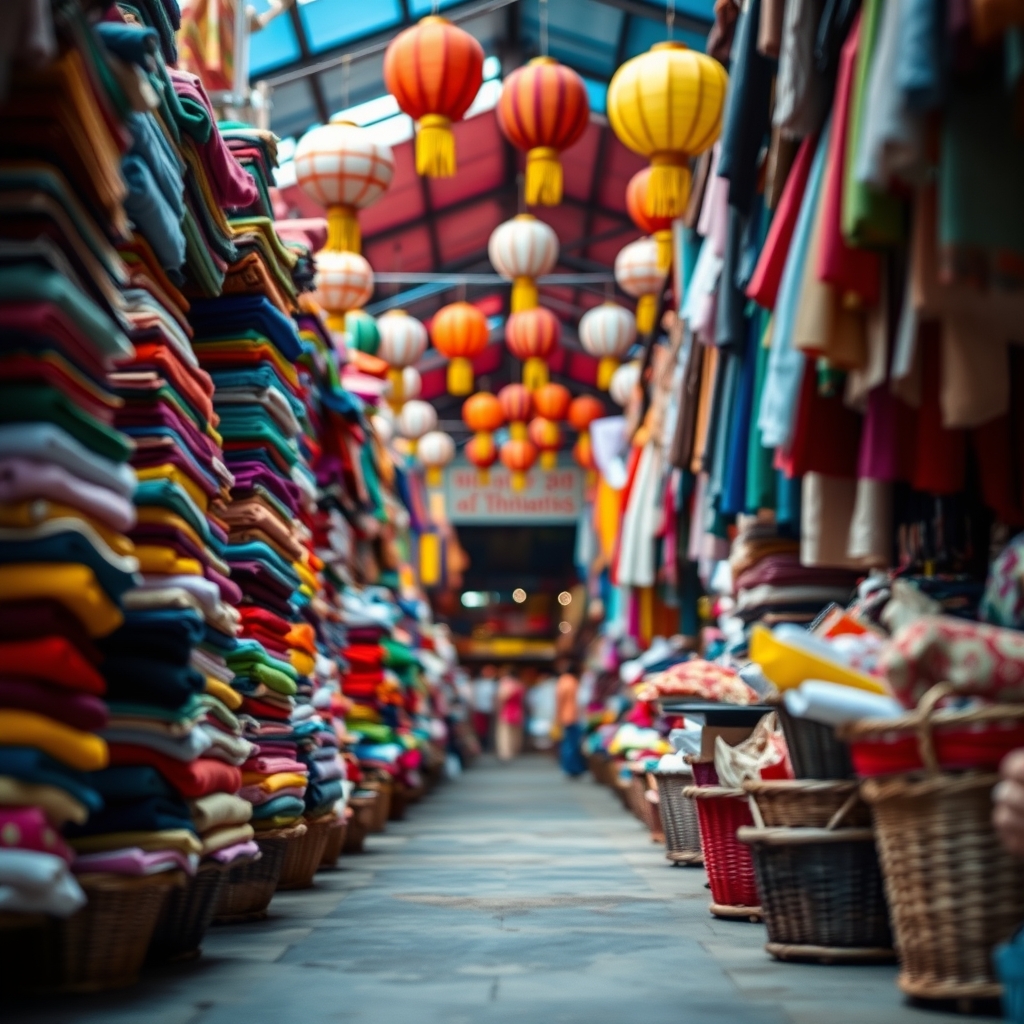
A Thailand B2B marketplace for importers solves one specific problem well: finding and shortlisting suppliers you would not otherwise have met, quickly and in one place. What it does not do is make the decision for you, and importers who treat a platform listing as a substitute for diligence are the ones who get disappointed. This guide places the marketplace channel against the alternatives, explains what supplier verification does and does not cover, and gives you a working method for sending requests and comparing what comes back.
Where a marketplace fits among your sourcing options
Importers sourcing from Thailand realistically have five channels, and a marketplace is one of them rather than a replacement for the rest.
Trade fairs and government-supported trade missions put you in front of exporters in person, which is excellent for assessing people and seeing samples, but they happen on a calendar and cost travel time.
Sourcing agents and buying offices do the legwork for you and can be worth their fee for a complex category, but you see the market through their relationships, and their incentives are not automatically aligned with yours.
Direct outreach — finding manufacturers yourself and contacting them — gives you the cleanest relationship, but response rates are low and you spend a lot of time on companies that turn out not to serve export buyers.
Wholesale markets in Bangkok are fast and tactile for small volumes, but documentation is usually limited, which constrains what you can do with the goods afterwards.
A B2B marketplace sits between agents and direct outreach. Its advantage is breadth and speed: you can see many candidates in a category, read structured company information side by side, and send the same enquiry to several of them. Its limitation is that everything you see is self-presented until someone checks it. That is why platforms add verification layers — and why understanding what those layers actually test is the single most useful thing an importer can learn about this channel.
What verification does and does not mean
Verification badges are useful signals and poor conclusions. The honest way to read them is to ask what was checked, by whom, and when.
Identity and business verification typically confirms that a legal entity exists, that its registration details match official records, and that the person operating the account is connected to it. This is genuinely valuable: it removes the category of risk where you are talking to a company that does not exist. It tells you nothing about product quality or capacity.
Factory or site assessment goes further, confirming that a manufacturing facility exists and operates in the stated categories. Again, scope matters — an assessment covers specific facilities and specific lines.
Certification indicators reflect documents the supplier holds, such as manufacturing standards or category-specific schemes. These should be read as pointers to documents you then verify with the issuing body, not as the verification itself.
Responsiveness and performance indicators describe behaviour on the platform, which is useful for predicting whether you will get a reply, not whether the goods will be right.
The principle to carry with you: **supplier verification** reduces risk; it does not remove it, and it is not a guarantee of any transaction outcome. On THAIMOST (thaimost.com), the trust layer is built around verified identity, site assessment and certification indicators, with supplier types stated explicitly — and payments are handled directly between buyer and supplier rather than by the platform at this stage. Whatever platform you use, confirm how it handles payment and dispute resolution before you rely on it.
Reading a supplier profile properly
Most sourcing mistakes begin with a misread profile. Four things to establish before you write to anyone.
Supplier type. A manufacturer makes goods in its own facility. An OEM/ODM factory makes goods to your specification or offers its own formulations for your brand. A brand owner sells its own products. A distributor or trading company buys and resells. All four can be legitimate partners — but they answer different questions, carry different margins, and give you different control. A trading company presenting itself as a factory is a red flag; a trading company that says plainly that it is one may be exactly the right partner for a mixed-category order. Platforms that distinguish these types explicitly save you a lot of wasted correspondence.
Category depth versus category list. A profile listing twenty categories usually means trading, not manufacturing. Look for depth: a narrow range with detailed specifications is a better sign than breadth.
Export evidence. Does the company describe markets it already ships to, documentation it can issue, and languages it works in? A supplier experienced in your destination region will cost you less in avoidable friction than one learning on your order.
What is missing. No address, no facility information, no named contact, no documentation discussion — absence is data. Also check whether the company can speak to your product format specifically, since capability within **OEM/ODM factories** varies sharply by format even inside one plant.
Writing a request that gets comparable answers
The quality of what comes back is set almost entirely by the quality of what you send. A vague enquiry produces vague replies that cannot be compared, which is how importers end up choosing on the lowest headline number.
Include all of these every time you **request a quote**:
- Exact product specification: format, size or weight, materials or ingredients where relevant, and any standard the product must meet.
- Destination country and port, because duty, documentation and labelling all follow from it.
- Packaging requirement: retail-ready or bulk, inner and outer carton expectations, labelling language.
- Documents you require with the shipment, listed explicitly.
- Your preferred Incoterms, so quotes include or exclude the same costs.
- Whether you need samples, and whether you are buying existing products or developing your own.
- Your intended order range and whether this is a trial or a recurring programme — being honest here produces better answers than overstating volume.
Send the identical brief to every candidate on your shortlist. Then note how each one replies: whether they answer your actual questions, whether they ask sensible clarifying questions, and how long they take. A supplier who asks what climate your warehouse is in, or what shelf life your market expects, is telling you something useful about how your third order will go. For broad categories such as **Thai products wholesale**, expect to send six or eight briefs to end up with three serious conversations.
Comparing quotes without being misled
Quotes from different suppliers are rarely comparable as received. Normalise them before you judge.
Put everything on the same Incoterms basis. A quote excluding freight will always look cheaper than one including it. Convert to a landed basis: goods, inland transport, international freight, insurance, duty and taxes in your market, customs clearance and broker fees, local delivery.
Check that the specification matches. A lower price frequently reflects a thinner material, a smaller fill, a different grade of input, or simpler packaging. Ask what changed rather than assuming the supplier is cheaper at the same thing.
Separate one-time costs from recurring ones. Tooling, artwork setup and development charges are paid once; unit price repeats. A quote with higher setup and lower unit cost may be better over a programme and worse for a trial.
Price the documentation. If one supplier can issue the certificates your market requires and another cannot, they are not offering the same product, regardless of unit price.
Factor payment terms and timing, since they affect your working capital as much as price does.
Then apply judgement that no spreadsheet captures: who communicated clearly, who was honest about what they could not do, and who you believe will tell you early when something goes wrong. Sourcing from **verified Thai suppliers** narrows the field to companies that exist and operate as described; choosing among them is still a commercial decision you make with incomplete information.
The diligence that stays yours
Whatever channel you use, a core set of checks remains your responsibility. Work through them before a significant commitment.
Confirm the legal entity. The company on your contract, invoice and bank instruction should be the same entity you verified. Payment instructions to a different name or a personal account warrant a stop and a direct call, not an email reply.
Verify documents at source. Certificates are verified with the issuing body, not by looking at the PDF. Check names, scope and validity dates.
See the product. Order samples from the production you will actually buy, and keep a retained sample as your reference for the first shipment. Agree in writing what happens if delivered goods differ from the approved sample.
See the site. A video walkthrough is a minimum; an in-person visit or a commissioned third-party audit is appropriate before a large order.
Check your own market's rules. Classification, duty, registration and labelling are determined by the authority in your country, and they change. Confirm with your customs authority, the relevant product regulator, or a licensed broker — treat any general guidance, including this article, as reference only.
Start small. A trial order tests packing accuracy, count accuracy, document completeness and behaviour under pressure, which is most of what you need to know and cannot learn from a profile.
Used this way, a marketplace is a strong first filter rather than a leap of faith: it shortens the search, surfaces candidates you would never have found, and leaves the decision where it belongs — with you.
Need expert support?
Leave your details and our team will get back to you.
FAQ
Frequently asked questions
Is a B2B marketplace safer than contacting Thai factories directly?
It is faster and gives you more candidates in one place, and verification layers remove the risk of dealing with a company that does not exist. But a platform listing is not a guarantee of quality, capacity or transaction outcome, and payment arrangements vary by platform. Treat the marketplace as a first filter, then run your own document checks, sample approval and site verification before committing.
What does a verified supplier badge actually prove?
Typically that a legal entity exists, its registration details match official records, and the account holder is connected to it — and, where site assessment applies, that a facility exists and operates in the stated categories. It does not assess your specific product, confirm capacity for your order, or validate certificates, which you should verify with the issuing body yourself.
How do I tell a manufacturer from a trading company?
Look for depth rather than breadth: a narrow category range with detailed specifications, facility information, and the ability to discuss production processes and equipment for your specific format. Very long category lists usually indicate trading. Ask directly which facility would produce your order and request documentation in that entity's name, then verify it independently.
How many suppliers should I contact before deciding?
For most categories, sending the same detailed brief to six to eight candidates tends to produce three substantive conversations worth pursuing. Sending the identical brief matters more than the number, because it is the only way to compare replies fairly. Judge not just the price but whether they answered your questions and what clarifying questions they asked.
Prepared by the Thaimost team for informational purposes. Some links may lead to referred partners.
Articles
Related articles

How to Negotiate with Thai Suppliers: A Practical Guide for International Buyers
Negotiating with Thai suppliers is different from negotiating with vendors in many Western markets — relationships, respect, and patience often matter as much as price. Whether you
Tìm nhà máy Thái Lan sản xuất theo yêu cầu: cách làm bài bản
Tìm nhà máy Thái Lan sản xuất theo yêu cầu không khó ở khâu tìm, mà khó ở khâu sàng lọc và so sánh. Bài này đưa quy trình 6 bước, cách phân biệt nhà máy thật với công ty thương mại, và checklist thẩm định.
Thai Food Manufacturers List: How to Build One You Can Trust
Searching for a Thai food manufacturers list usually produces one of two things: a directory of names with no context, or a page selling you